Top 10 NY Construction Safety Trends for 2026
Updated on:
Published on:
February 17, 2026
New York’s Construction Safety Trends for 2026
New York’s construction industry continues to face complex safety challenges as projects grow larger, timelines tighten, and regulations evolve. As we move into 2026, safety practices in NY construction are being reshaped by new technologies, updated regulations, and a stronger focus on worker well-being. Staying ahead of these trends is critical for contractors, site managers, and safety professionals aiming to reduce incidents and remain safe. From digital safety tools to evolving fall protection standards, the industry is shifting toward more proactive and data-driven approaches. This blog highlights the top construction safety trends expected to define New York job sites in 2026.
Digital Safety Tools & Real-Time Monitoring
New York construction sites are increasingly adopting digital safety tools to improve visibility into daily jobsite conditions. Real-time monitoring helps identify risks as they develop rather than after an incident occurs. These tools support faster decision-making and encourage preventive action by supervisors and safety teams. In 2026, digital systems are expected to play a central role in proactive construction safety management.
Wearables and IoT Sensors
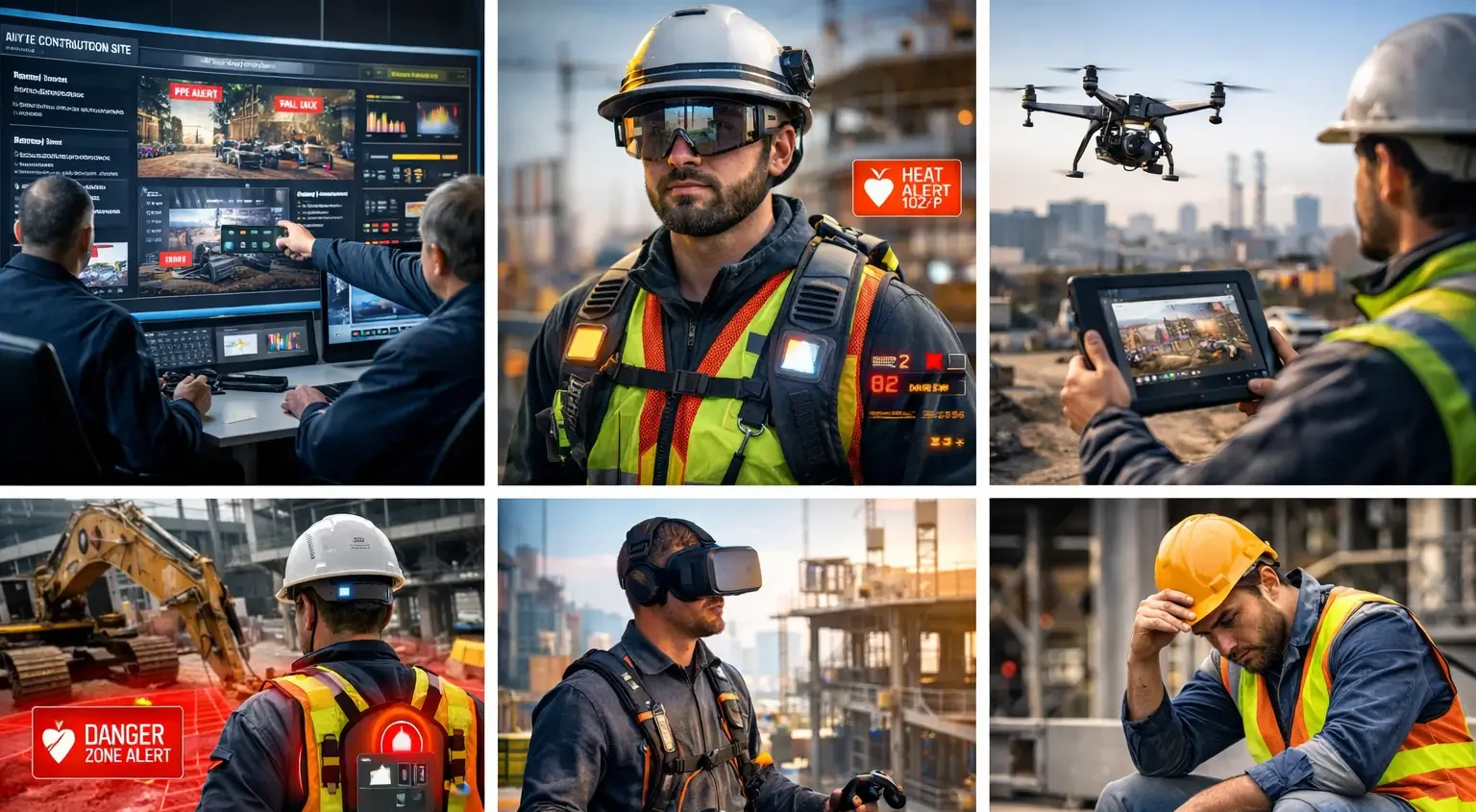
Wearable devices and IoT sensors are being used to monitor worker fatigue, heat stress, and movement patterns during physically demanding tasks. By tracking vital signs and activity levels, supervisors can intervene before exhaustion leads to unsafe conditions. Geofencing technology also helps restrict access to high-risk zones, reducing the likelihood of accidental exposure to active equipment or hazardous areas.
Real-Time Hazard Alerts
AI-driven alert systems analyze data from sensors, equipment, and site conditions to identify potential hazards instantly. These alerts notify workers and supervisors when risks such as equipment proximity, unstable conditions, or environmental threats arise. Integration with site dashboards and mobile notifications ensures safety information is communicated quickly, helping teams respond before incidents escalate.
Extended Reality (XR) Training on Site
Extended Reality (XR) technologies are transforming how construction safety training is delivered on New York jobsites. By combining virtual and augmented reality, XR allows workers to experience realistic scenarios in a controlled environment. In 2026, these tools are expected to support more engaging, practical training that improves hazard awareness and retention without disrupting active work areas.
Virtual & Augmented Reality Simulations
Virtual and augmented reality simulations provide safe exposure to jobsite hazards without placing workers at actual risk. These simulations allow trainees to practice equipment operation, working at heights, and navigating fall hazards in lifelike settings. By repeating scenarios and correcting mistakes in real time, workers can build confidence and safer decision-making skills before performing tasks on site.
Scenario-Based Safety Reinforcement
XR-based training is especially effective for preparing workers for uncommon but high-severity events. Scenarios such as equipment failures, structural instability, or emergency evacuations can be practiced in detail. This approach reinforces correct responses and helps workers stay prepared for situations they may rarely encounter but must handle correctly when they occur.
Mobile Safety Apps & Paperless Reporting
New York construction sites are increasingly adopting mobile safety apps to streamline safety management and improve visibility into daily conditions. Digital inspection tools allow supervisors and crews to complete checklists in real time, reducing delays and missed documentation. Immediate incident and near-miss reporting, often supported by photo uploads, helps identify risks earlier and supports faster corrective action. Aggregated data from these platforms enables trend analysis, helping employers focus prevention efforts where risks appear most frequently.
Emphasis on Mental Health & Worker Well-Being
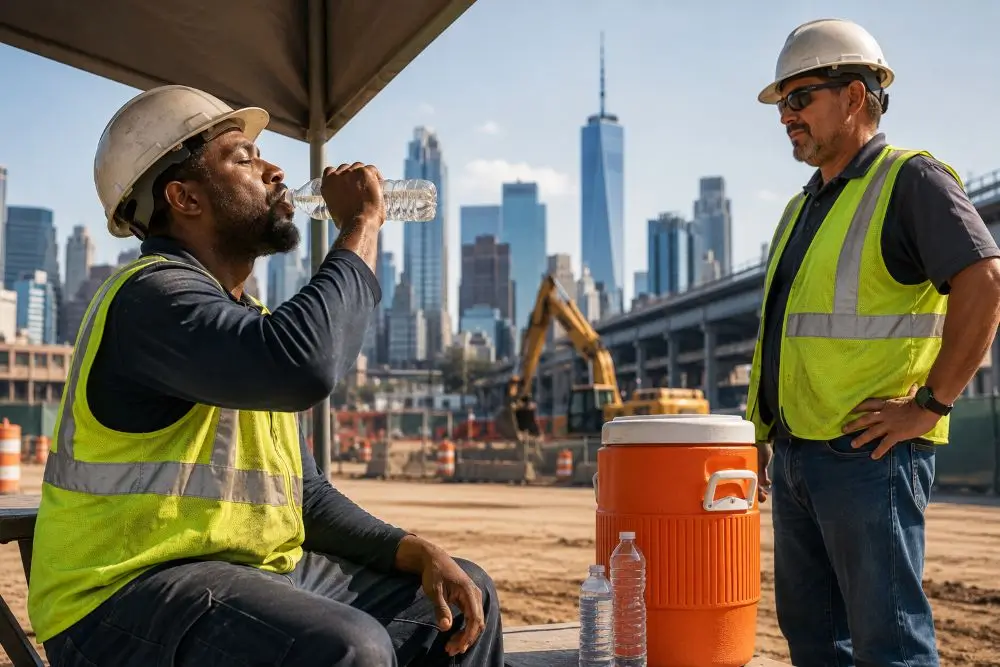
Mental health and worker well-being are becoming a stronger focus in New York’s construction safety landscape as employers recognize their impact on physical safety. Programs addressing stress, fatigue, and substance misuse are being integrated into broader jobsite safety efforts. State-level initiatives and employer-led support programs aim to reduce stigma and encourage early intervention. A healthier, more supported workforce is associated with better focus, fewer errors, and a lower risk of injuries on construction sites.
Predictive Analytics & Data-Driven Safety
Predictive analytics is playing a growing role in construction safety by using historical jobsite data to identify patterns that may signal future hazards. Advanced data models help flag high-risk tasks, locations, or time periods before incidents occur. Machine learning tools are increasingly used to assign risk scores, allowing safety teams to focus attention where it is most needed. These insights support smarter decisions around training priorities, staffing, and preventive controls across New York construction projects.
Evolving PPE & Wearable Protective Technology
Personal protective equipment is evolving beyond basic protection, with smart PPE now incorporating sensors that detect impacts, heat stress, and environmental exposure. In New York, climate-driven adaptations such as cold-weather gear and breathable summer PPE are becoming more common to address seasonal risks. Advances in fit, comfort, and ergonomic design are also improving worker acceptance and consistent use. Together, these innovations help reduce fatigue, improve mobility, and strengthen overall jobsite protection.
Fall Prevention Innovation
Fall prevention remains a top priority in construction safety, especially in high-density urban projects across New York. New technologies and equipment designs are improving how fall risks are managed, focusing on faster deployment, better protection, and quicker response when incidents occur.
New Guardrail Systems
Modern guardrail systems are increasingly modular, allowing for quicker installation and removal without compromising strength or stability. These systems adapt more easily to changing jobsite layouts, making them practical for phased construction projects. Improved materials and standardized components help reduce installation errors and maintenance needs. As a result, guardrails can be deployed earlier and more consistently across elevated work areas.
Advanced Harness & Anchor Solutions
Advanced harness and anchor systems now incorporate improved shock-absorbing technology to reduce injury severity during a fall. Some solutions include integrated sensors that detect sudden load changes and trigger real-time fall alerts. These alerts notify supervisors immediately, enabling faster emergency response. Enhanced comfort and adjustability also encourage proper use throughout the workday.
Conclusion
As New York’s construction industry moves into 2026, safety practices are increasingly shaped by technology, data, and a deeper understanding of worker well-being. From digital monitoring tools and predictive analytics to advancements in PPE and fall prevention systems, these trends reflect a shift toward more proactive and preventive safety approaches. Employers who stay aware of these developments are better positioned to address evolving job-site risks and changing work environments.
Adopting emerging safety tools and reinforcing strong training and reporting practices can help reduce incidents while supporting a safer, more resilient workforce. By aligning safety strategies with these forward-looking trends, construction teams in New York can strengthen daily risk awareness, improve response capabilities, and foster a culture that prioritizes prevention over reaction.
Related Posts
Is New York an OSHA State?